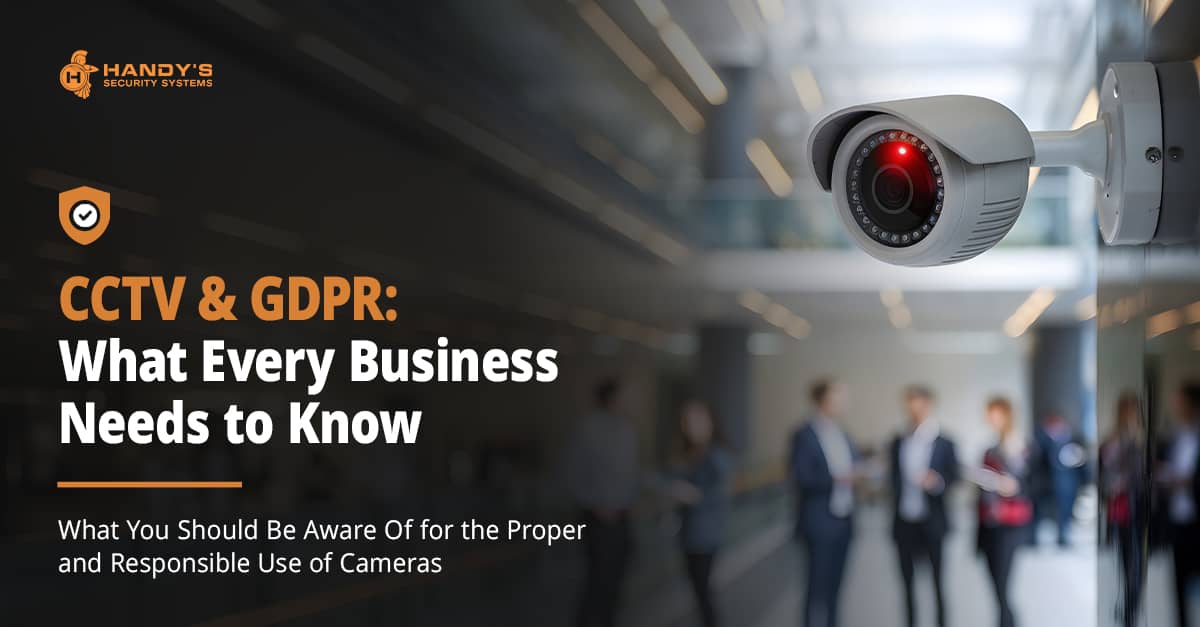

CCTV and GDPR: What a Business Needs to Know Before Installing Cameras
Today, business security is not a luxury, but a necessity. CCTV systems help protect staff, customers, facilities, and property. However, before a business proceeds with installing security cameras, there is one very important factor it must not overlook: the GDPR.
Proper CCTV installation is not just about security. It is also about respecting personal data.
Why is CCTV considered personal data?
Cameras record images of individuals, employees, customers, or visitors. According to the GDPR, an image of a person is considered personal data. This means that any business using CCTV must comply with specific rules.
In simple terms:
A business cannot install cameras “wherever it wants” or retain recordings without a legitimate purpose and established procedures.
What a business needs to know before installing CCTV
1. There must be a legitimate purpose
The installation of cameras must serve a clear and legitimate purpose, such as:
- Protection of staff
- Prevention of theft
- Protection of property
- Access control
- Facility security
- CCTV cannot be used for excessive surveillance of staff or customers.
2. Cameras must be properly installed
Cameras should only record necessary areas.
The following are generally permitted:
- Entrances/exits
- Cash registers
- Storage areas
- Parking lots
- Outdoor areas of the business
The following are not permitted:
- Restrooms
- Changing rooms
- Staff break rooms
- Excessive monitoring of offices
The goal is security, not invasion of privacy.
3. The business must notify that CCTV is in use
The GDPR requires clear notification that the premises are under surveillance.
For this reason, there must be visible signs stating:
- That a CCTV system is in operation
- Who is the data controller
- Purpose of recording
- Contact information
This notice must be provided before anyone enters the premises.
4. Recordings must be protected
Video footage from the cameras must be stored securely.
Access must be granted only to authorized individuals.
Additionally:
- Strong passwords are required
- Secure remote access
- Regular system updates
- Protection against hacking
- An insecure CCTV system can lead to serious problems and fines.
5. You should not keep recordings indefinitely
The GDPR states that data should be retained only for as long as necessary.
In most cases:
7 to 30 days is considered a reasonable retention period, depending on the nature of the business.
After that, the footage must be automatically deleted.
6. Employees must be informed
If there are cameras in the workplace:
- Employees must be informed
- They must know the purpose
- There must be a CCTV usage policy
Transparency is a key requirement of the GDPR.
What are the benefits of a properly installed CCTV system?
When a system is installed correctly and in compliance with the GDPR, it offers:
- Increased security
- Reduction in theft and vandalism
- Evidence in the event of incidents
- A sense of protection for staff and customers
- Better control of facilities
The right balance between security and privacy is key.
At Handy’s Security, we don’t just offer modern, high-tech CCTV systems.
We guide businesses to ensure that the installation is done correctly, professionally, and in accordance with the basic GDPR requirements.
With nearly 30 years of experience in the security sector, we help businesses across Cyprus obtain solutions that combine:
- Security
- Reliability
- State-of-the-art technology
- Responsible data usage
Want to find out which CCTV solution is right for your business?
The Handy’s Security team is here to guide you with professionalism and reliability.
📞 Contact us today for a free site assessment and security recommendations.